


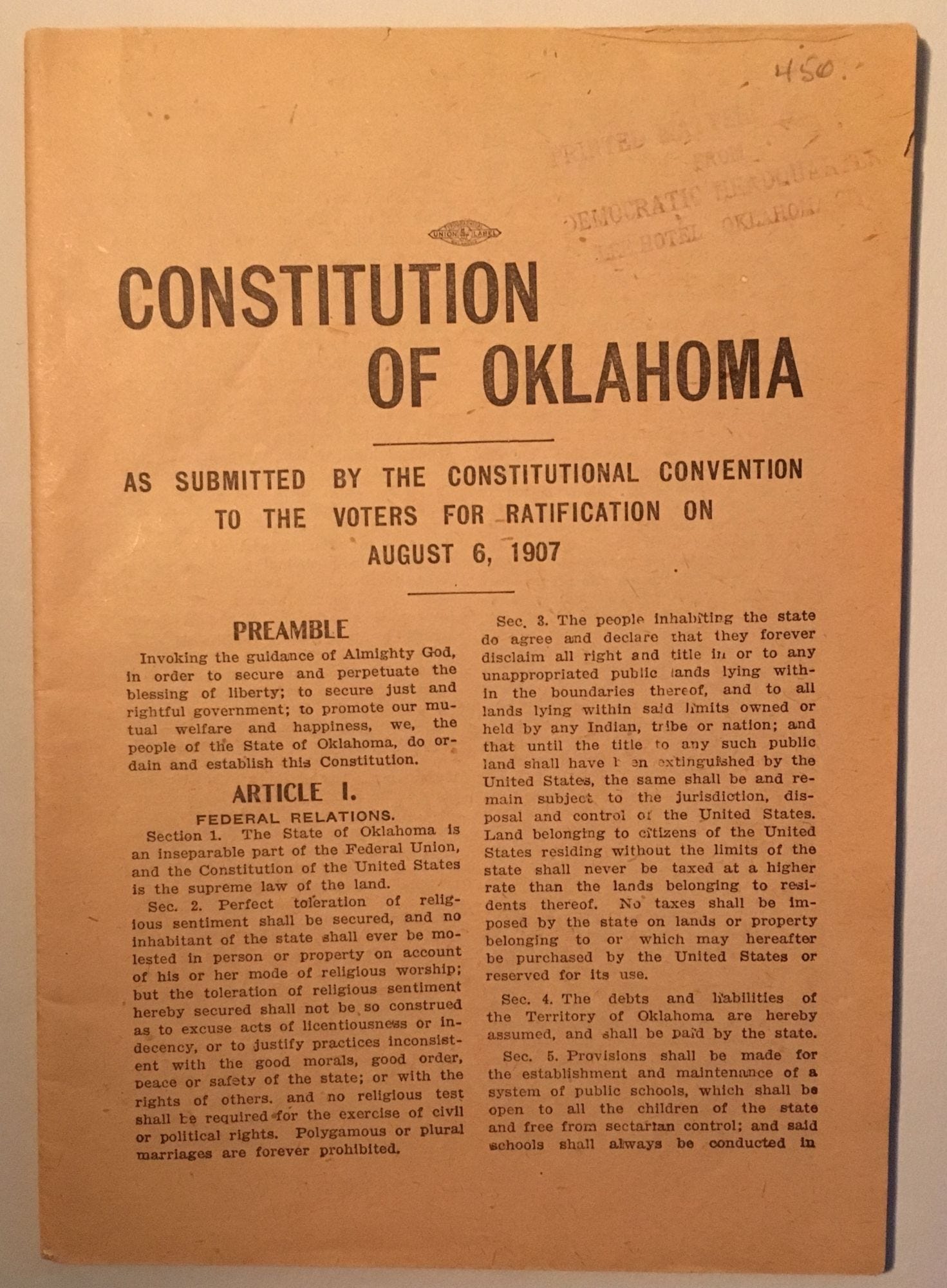
Oklahoma voters will decide State Question 844 on Aug. 25, a constitutional amendment that would change how the state repays schools, counties and other local governments for property tax revenue lost to Oklahoma’s five-year manufacturing exemption.
Article X, Section 6B of the Oklahoma Constitution exempts qualifying new or expanding manufacturing facilities from ad valorem taxes for five years. Voters created the exemption in 1985 through State Question 588. The section, as amended, requires the Legislature to reimburse common schools, county governments, cities and towns, emergency medical services districts, vocational-technical schools, junior colleges, county health departments and libraries for the revenue those entities lose to the exemption.
State Question 844 would remove that requirement from the Constitution and instead direct the Legislature to set reimbursement levels and methods by statute. The measure would also change how exempt property counts toward the debt limits of school districts and other political subdivisions, tying that calculation to the level of reimbursement.
The Legislature sent the question to the ballot through House Joint Resolution 1087, authored by House Speaker Kyle Hilbert, R-Bristow, and Senate President Pro Tem Lonnie Paxton, R-Tuttle. The House passed it in March. The Senate passed it 38-7 on April 9.
The state paid $93 million in manufacturing exemption reimbursements in tax year 2024, according to the Oklahoma Tax Commission. The figure peaked at $161 million in tax year 2019.
Paxton called the exemption “very, very expensive” and said the change would give the Legislature more control over the amounts. Sen. Mary Boren, D-Norman, voted against the measure, saying she could not make the numbers work. Dewey County Assessor Jennifer McCormick, an officer of the County Assessor Association of Oklahoma, said reimbursements are funded in part from state income tax collections, which the state is working to phase out.
The amendment does not itself cut reimbursement funding. If voters approve it, future funding levels would be set by future Legislatures rather than guaranteed by the Constitution. Every school district in Oklahoma, along with county governments, health departments, libraries and emergency services districts, receives ad valorem revenue subject to the current reimbursement requirement.