


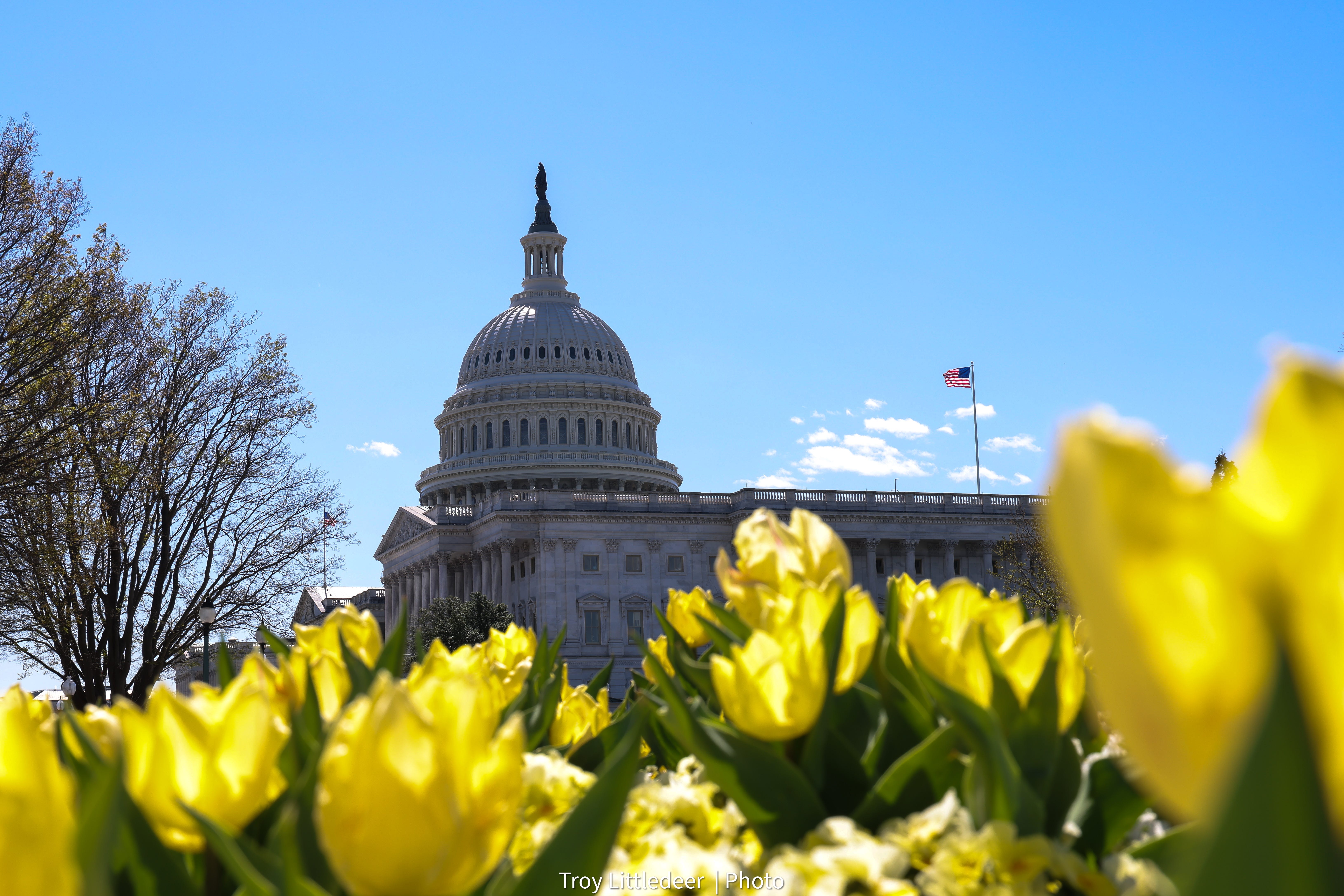
The U.S. Senate has passed a bill that would change how the federal government protects tribal sacred places and historic sites when it signs off on big projects like pipelines, power lines and highways.
Agencies would get to decide how much of a sacred place gets reviewed, and tribes would have 45 days to object. If a judge later found an agency violated the bill’s historic-preservation requirements, in most cases the judge still couldn’t stop the project.
The bill is the Bipartisan American Affordability and Jobs Act, or BAAJA. Two Republican and two Democratic senators introduced it Sept. 30 as S. 5653. The Senate then used a House bill, H.R. 2347, as the vehicle and passed BAAJA 62-33 on Nov. 19 as an amendment to it, which is why it carries that number in the House now. Oklahoma’s two senators, Republicans James Lankford and Alan Armstrong, both voted yes, according to Senate vote records.
Supporters say it would speed up energy, housing and internet projects and help bring costs down. Next up is the House Rules Committee, which meets on it Monday, Nov. 30, at 4 p.m. Eastern, 3 p.m. Central, to set the terms for House debate. That’s not a final vote, and if the House changes the bill, it goes back to the Senate.
For tribes, the fight is mostly over Section 106 of the National Historic Preservation Act. The 1966 law says that before the federal government approves or pays for a project, it has to consider whether the project could harm historic places, and that includes places that are sacred or culturally important to tribes. Federal law already requires agencies to consult with tribes about those places, though tribes can’t block a project on their own.
WHAT THE BILL CHANGES
Under BAAJA, the agency draws the line around the area a project could affect. The bill says: “The responsibilities of a Federal agency under this section shall be limited to historic properties within the area of potential effects identified by the Federal agency.” So the agency only has to account for what’s inside the line it drew. A sacred place that runs past that line gets reviewed only for the part that falls inside it.
There are two clocks. When an agency asks a tribe to review a report or finding, the tribe generally has 30 days to respond. If it misses that deadline and comes back into the process later, the agency doesn’t have to go back and reconsider earlier findings. Once the tribe is taking part, it generally has 45 days after getting the report to raise substantive objections. If no objections come in, the agency moves toward its decision. If the tribe does object in time, the agency gets 30 days to write back explaining how it weighed them, and once that letter goes out, the bill treats consultation on that report as done. The agency doesn’t have to agree with the tribe. A federal official can also decide, on the official’s own judgment, that other concerns outweigh protecting the site.
The bill also changes what happens in court. Most lawsuits would have to be filed within 150 days of whichever comes later: public notice of the final agency decision or notice to the tribe or preservation office. When a public comment period applies, most other parties would have to show they raised the same issue in a detailed public comment. Tribes and certain preservation officials could preserve issues by giving the agency detailed written notice during consultation. Most cases would start in a federal appeals court, where judges would be required to lean heavily toward the agency’s judgment. A judge who found the agency broke the rules generally could only send the decision back to be fixed. Canceling the approval or stopping the project would be off the table. There’s a narrow exception: a judge may temporarily stop a project that likely breaks a different federal law, if the other legal tests for that kind of order are met, but a violation of the historic preservation rules by itself wouldn’t qualify.
The bill reaches past Section 106, too. It would shorten some Endangered Species Act review deadlines, from 90 days to 60 and from 150 days to 100, and fewer federal projects would need a full environmental review under the National Environmental Policy Act. States and tribes with Clean Water Act authority would have less room to turn down a project over water quality. For certain interstate power lines and natural gas pipelines, they’d get no more than nine months to decide on certification. To deny certification, they’d have to show with strong evidence that no reasonable change or condition could bring the project in line with water-quality rules. Some Clean Water Act permits, including general permits for filling in wetlands and streams, would last 10 years instead of five.
WHAT THE BILL ADDS
The bill would write new, detailed deadlines and steps for tribal consultation directly into the National Historic Preservation Act. Right now a lot of how that consultation works sits in federal rules, and those can change without Congress voting. The Institute for Progress, a Washington policy group, argues that putting the process in the law protects tribes, since the federal Advisory Council on Historic Preservation has been working to rewrite those rules.
It would also let a tribe approve roads, power lines and other access routes across its own land under its own rules, once the Interior secretary signs off on those rules, without needing federal approval each time. And it would allow Congress to spend up to $20 million a year from 2027 through 2030 on grants helping tribal historic preservation offices build databases of culturally important places. Information in those databases that is accessed by or shared with federal agencies or state historic preservation officers would be exempt from disclosure under the federal Freedom of Information Act, and offices wouldn’t have to disclose sensitive details about a site’s location, character or ownership when that could harm the site or get in the way of its traditional use. It would also allow up to $200 million a year through 2036 for the national Historic Preservation Fund, though neither amount guarantees funding; Congress would still have to appropriate the money.
Tribal historic preservation offices would also face federal checkups at least every two years. An office found out of line with the law, including for missing consultation deadlines, would get a written explanation, technical help and at least 180 days to send in a plan to fix the problem. The plan could run up to two years from the written finding. If a major part of the program still doesn’t meet the law after that, the Interior secretary must suspend some or all of the affected federal contracts, agreements and Historic Preservation Fund grants.
HOW TRIBES ARE RESPONDING
The National Congress of American Indians asked the House on Nov. 24 to vote the bill down, saying the Senate version still threatens tribal sovereignty, sacred places, natural resources and consultation. NCAI thanked Sens. Lisa Murkowski, R-Alaska, and Brian Schatz, D-Hawaii, for trying to address tribal concerns.
The National Association of Tribal Historic Preservation Officers wants the historic preservation section pulled from the bill. In a Nov. 18 statement with NCAI and the Association on American Indian Affairs, NATHPO said the latest Senate changes did not resolve its concerns.
Dr. Beau Carroll, historic preservation officer for the Eastern Band of Cherokee Indians, spoke to the Cherokee One Feather newspaper before the final Senate vote. He said the tribe’s homeland covers parts of eight states, and that a place doesn’t lose its cultural importance just because someone outside the tribe owns the land now. KGOU reported that the Muscogee Nation’s Historic and Cultural Preservation Department also opposed the bill.
Not every tribe is against it. Utah Public Radio reported that the Crow Tribe in Montana has supported the bill, and the National Tribal Energy Association, an intertribal group, has backed faster permits for energy projects on tribal land.
Sen. Adam Schiff, D-California, filed an amendment to remove the historic preservation section, but the Senate never voted on it, and the final vote covered the whole bill at once. If the House passes it without changes, it would go to President Donald Trump.
Author: Troy Littledeer is a Keetoowah Cherokee writer, with more than 20 years in Indigenous media. He received the Indigenous Journalists Association’s Tim Giago Free Press Award in 2025 for defending press freedom. His reporting, commentary and photography have appeared in The Times, Native News Online, Osage News, the Cherokee One Feather, the Tahlequah Daily Press and other outlets. He has served as media director for the United Keetoowah Band of Cherokee Indians in Oklahoma and as PR coordinator for the Cherokee Nation. He lives and works on the Oklahoma Cherokee Reservation. Reach him at troy@candyminksprings.com. On social media: @troylittledeer.