


A U.S. Senate committee has approved a bill that would put Cherokee historic sites in Tennessee into federal trust for the Eastern Band of Cherokee Indians. In a trust arrangement, the United States holds the land for the tribe’s benefit.
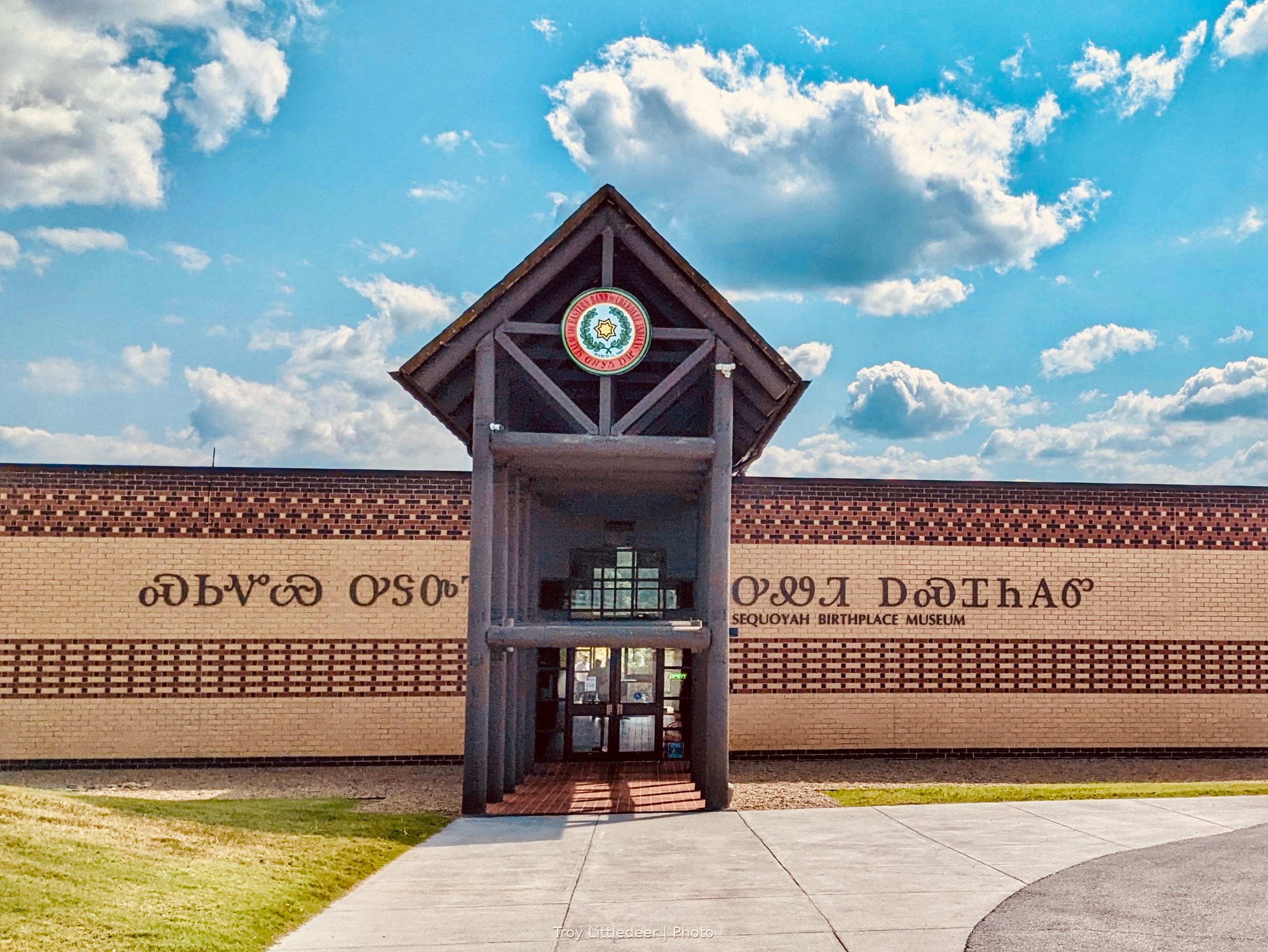
The Senate Committee on Indian Affairs passed it unanimously Nov. 18, according to the Cherokee One Feather. The land sits along Tellico Reservoir in Monroe County, Tennessee, and includes the Sequoyah Birthplace Museum and the Chota and Tanasi memorial sites.
The bill is H.R. 226, the Eastern Band of Cherokee Historic Lands Reacquisition Act, introduced by Rep. Chuck Fleischmann, R-Tenn. It would put about 76.1 acres the Tennessee Valley Authority now manages into trust for the tribe. Another 19.9 acres would be covered by permanent easements that give the tribe lasting rights for trails connecting the sites.
Sen. Lisa Murkowski, R-Alaska, chairs the committee. Before the vote, she said the tribe “has pursued this legislation for 12 years, spanning six Congresses.” She said she hopes the committee “can finally get it across the finish line this year.”
It’s been through the House before. A version passed in each of five consecutive Congresses, including 383-2 in 2018 and 407-16 in 2021, with two others passing by voice vote, and none of them became law. This one passed by voice vote Feb. 4, 2025.
The bill lays out how the land could be used. One purpose is “the memorial and place of reinterment for remains of the Eastern Band of Cherokee Indians and other Cherokee tribes.” Reinterment means burying remains again. The provision also covers remains already transferred to the Eastern Band and other Cherokee tribes, plus human remains and cultural items TVA transferred under federal repatriation law. The bill does not identify the other Cherokee tribes.
In 2017, the Department of the Interior told a House subcommittee that the wording “may unintentionally limit items” that could be reinterred. The current bill keeps the phrase the department flagged and adds the remains and items TVA transferred under federal repatriation law.
That provision goes back to when Tellico Reservoir was built. Archaeologists from the University of Tennessee’s McClung Museum dug up Cherokee graves as part of the project, according to a 2011 Federal Register notice. The work ran from 1967 to the mid-1980s at five historic Overhill Cherokee towns: Chota, Tanasee, Tomotley, Toqua and Citico.
Under an agreement between TVA and the Eastern Band, the human remains recovered during the project went to the tribe for reburial in 1986, the notice states. A post by Timothy E. Baumann, curator of archaeology at the University of Tennessee’s McClung Museum, says 191 Cherokee ancestors were reburied that year near the Sequoyah Birthplace Museum.
The objects buried with them weren’t part of that reburial. In 2011, TVA and the McClung Museum reported about 54,000 funerary objects from the five sites, about 53,000 of them glass beads. They determined the objects were culturally affiliated with the Cherokee Nation, the Eastern Band of Cherokee Indians and the United Keetoowah Band of Cherokee Indians in Oklahoma, and the notice said the objects could go back to those three tribes if no other claimants came forward.
Principal Chief Michell Hicks testified for the Eastern Band at a Sept. 23 committee hearing. He called the properties “a small part of our ancestral homelands.”
“We do not measure the importance of these places in acres. We measure it in generations,” Hicks said. He told the committee that Congress “can return these lands to our tribe” and that the tribe would “fulfill the responsibility that comes with this land.”
The bill bans Class II and Class III gaming, as the Indian Gaming Regulatory Act defines them, on the covered land. Murkowski said TVA would keep its authority over river control and development.
Next it goes to the full Senate. If senators pass it without changes, it would go to the president, and the 119th Congress ends Jan. 3, 2027.
AUTHOR
Troy Littledeer, the Kituwah Punk, is a Keetoowah Cherokee writer with more than 20 years in Indigenous media. He received the Indigenous Journalists Association’s Tim Giago Free Press Award in 2025, and his work has appeared in The Times, Native News Online, Osage News, the Cherokee One Feather and the Tahlequah Daily Press. He lives and works on the Oklahoma Cherokee Reservation.