

TAHLEQUAH, Okla. — Members who want to run for a Council seat this year will have to meet rules that are not written in the Band’s 1950 Constitution, according to a comparison of the Constitution and the election ordinance.
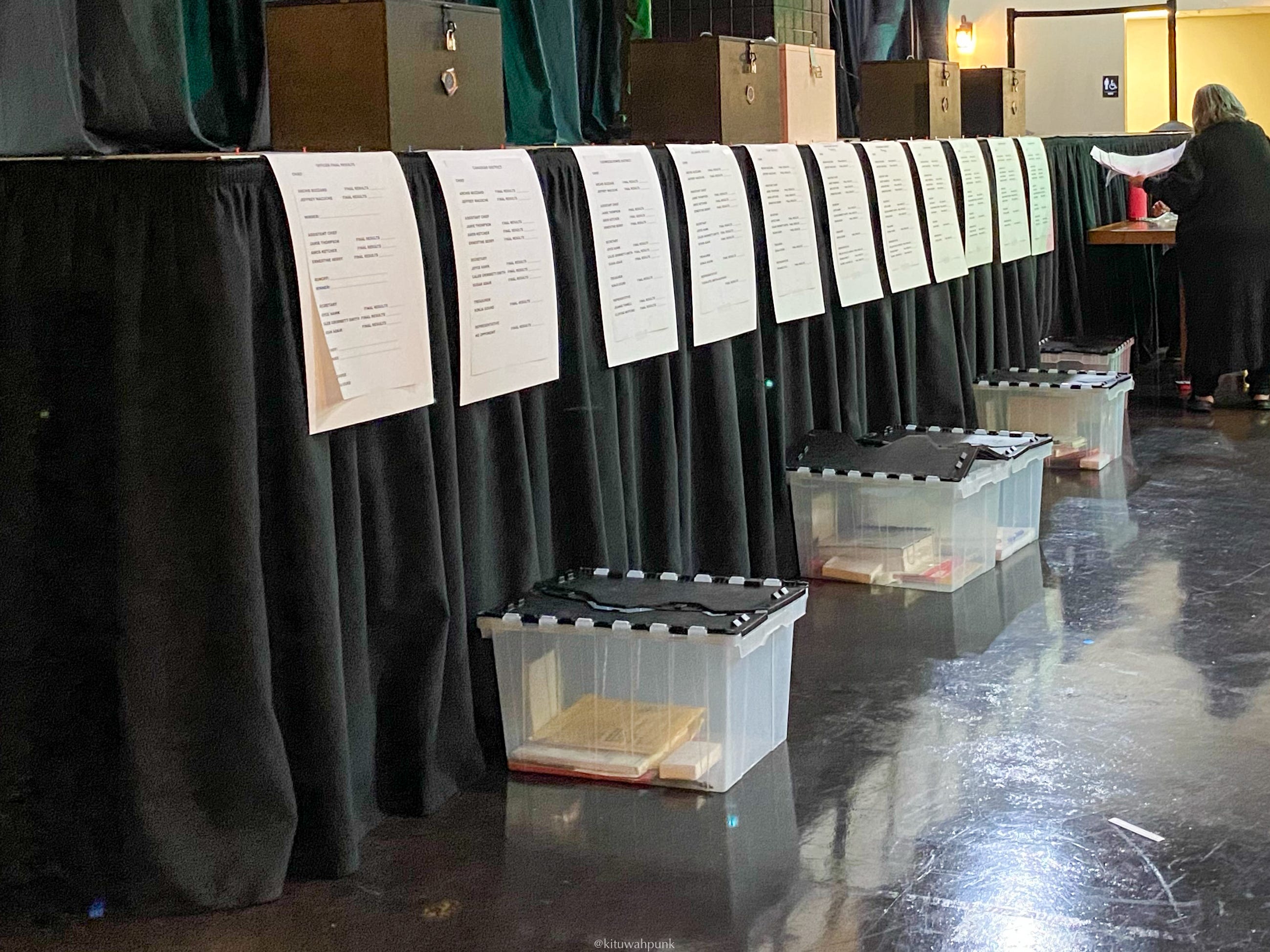
Council candidates file this August. The filing period opens Aug. 3 and closes Aug. 14, under the 2025 UKB Election Ordinance, Resolution 25-UKB-132.
Council seats and the offices of Chief, Assistant Chief, Secretary and Treasurer are elected on different schedules. Council members serve two-year terms. The four officers serve four-year terms. Only Council seats are up this year.
The Constitution lists three qualifications for Council candidates: be at least 21 years old, live in the district the candidate wants to represent, and be a member of the Band. It lists no others.
The ordinance adds:
Section 501 of the 2025 Election Ordinance requires several qualifications not listed in the Constitution. Candidates must have lived in the district for two years before filing. They must have been an exclusive member of the Band for five years. They cannot have served as an elected official of another federally recognized tribe. They must have a valid driver’s license and a high school diploma or equivalent.
The ordinance also requires candidates to submit to a criminal background check by the Election Board. A felony conviction within the previous 10 years disqualifies a candidate under the ordinance.
So where does the Council’s power to make these rules come from? Two documents give the Council authority over elections. The Constitution says the Council can hold elections “under rules and regulations to be prescribed by the Council.” The Corporate Charter, from 1950, says the Band can “regulate the manner of holding Band elections.” Neither document says in plain words whether that power lets the Council add new qualifications, or only lets the Council manage how the vote is run.
The Constitution does have a process for changing its own provisions. It is called an amendment. Under Article XII, an amendment can be proposed by a majority vote of the Council or by a petition signed by 30 percent of eligible voters. It then needs approval from the Secretary of the Interior and a vote of the membership, with at least 30 percent of eligible voters casting ballots.
No ruling from the UKB Tribal Court answering this question turned up in the documents reviewed for this report. Whether the Council can add those qualifications without changing the Constitution is a question the Tribal Court has not yet decided.
A candidate who is turned down after the background check can appeal in writing within 10 business days of getting the disqualification notice.
For someone thinking about running for Council, meeting the Constitution’s three qualifications is not enough under the current ordinance. A candidate also has to clear the additional requirements in Section 501, including the driver’s license, the diploma, and the background check, or the Election Board can keep that candidate off the ballot.
SOURCES
United Keetoowah Band of Cherokee Indians in Oklahoma, Constitution and Bylaws (1950), Articles V, VI, VII, XII, XL.
United Keetoowah Band of Cherokee Indians in Oklahoma, Corporate Charter (1950).
2025 UKB Election Ordinance, Resolution 25-UKB-132, Sections 501-502.