


ROSE, Okla. — The wastewater doesn’t ask permission. It moves downhill, off a contract grower’s land in Adair County, into a creek, into the Illinois River watershed, past families who didn’t sign anything.
Oklahoma sued the poultry industry over that water in 2005. Hannah Cole, the Democratic nominee for House District 86, draws a careful line on who’s actually responsible.
“My opponent is widely known as the poultry farmer’s friend,” she said. “I would like to reframe that. My opponent is Big Ag’s friend.”
In her account, contract growers are the ones absorbing the risk in that arrangement — processors like Tyson, Pilgrim’s and George’s setting tournament-style pay that pits neighboring farmers against each other, requiring upgrades before a contract renews, and in at least one case she cited, threatening not to renew a contract before reversing course.
“Tyson and the likes do not provide benefits for farmers,” she said. “No healthcare. No retirement funds. Nothing.”
Rep. David Hardin, R-Stilwell, has held the House District 86 seat since 2018 and is now defending it against Cole. He urged Attorney General Gentner Drummond to withdraw the lawsuit outright after a federal judge rejected the state’s first settlement offer in April. In August, the Tenth Circuit stayed the underlying judgment in light of a new settlement Drummond struck with all six poultry companies, sending the case back to district court. Under that settlement, the companies will pay $41.671 million into an environmental relief fund, $420,000 in penalties to the Oklahoma Department of Environmental Quality and $1.9 million for an independent compliance monitor, while phasing down litter application in the watershed over seven years.
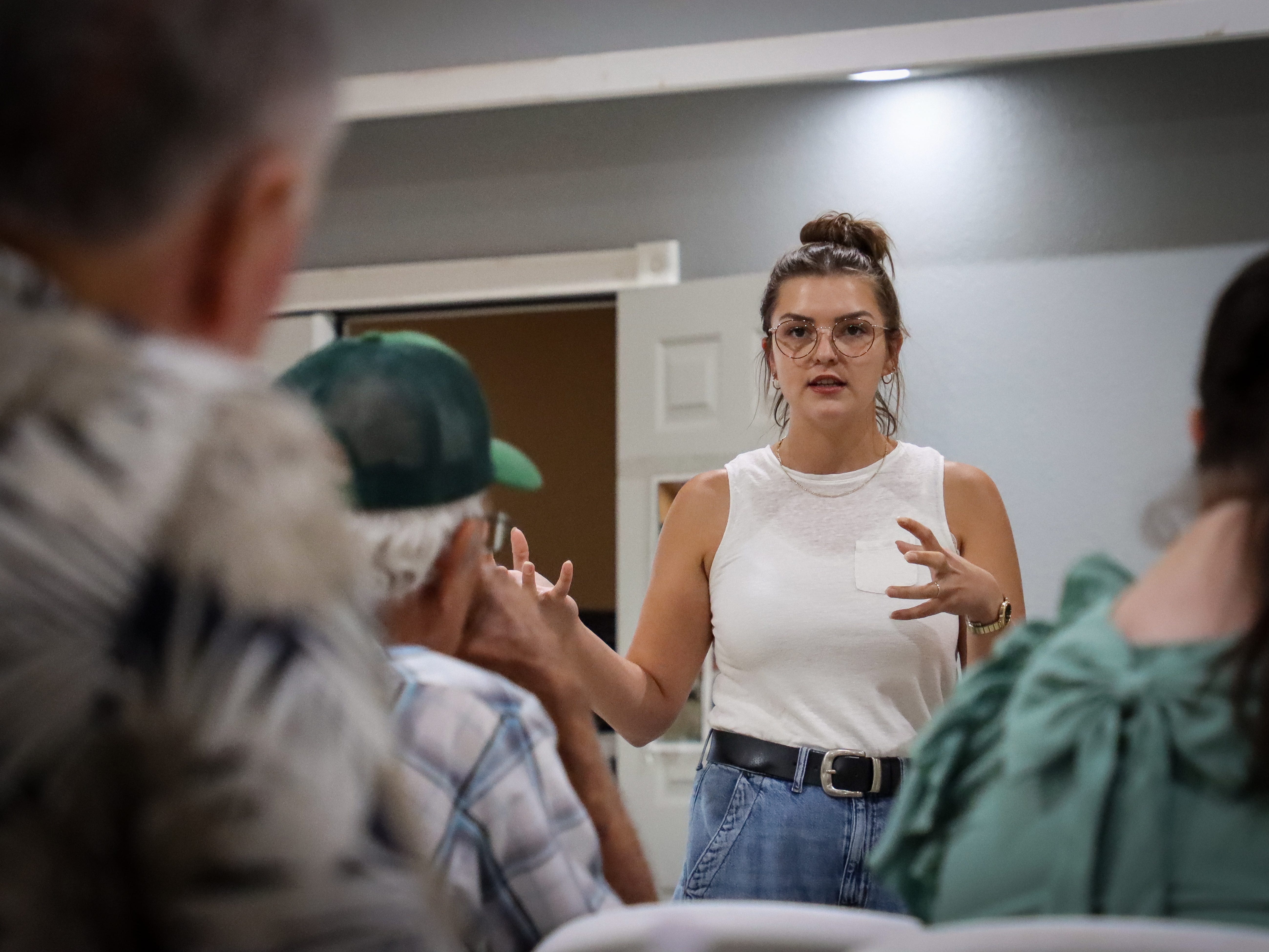
Cole doesn’t locate the failure in a missing law.
“We have the laws that say you cannot do this,” she said, “but we do not have any form of enforcing said law.”
She’d have voted no on HB 4118, the 2024 bill Hardin authored that would have granted poultry operators immunity from nuisance liability for waste application under an approved management plan; that immunity language ultimately passed as part of a separate measure, SB 1424, which Gov. Kevin Stitt signed into law that May. Her fix: make the companies pay for containment, not the growers.
She names a similar imbalance as the reason she filed to run for office.
“When I became aware of the school voucher program and how it is mostly utilized by wealthy individuals is what solidified my decision to run for elected office,” Cole said. “Witnessing that transfer of wealth from Oklahoma’s bottom to the top was when I decided enough was enough.”
On taxes, she draws a distinction.
“I do not believe in burdensome taxes, but I do believe in fair taxes,” she said. “When productive members of society pay their fair share, we all benefit.”
She’s a licensed practical nurse — has been since she was 19, and still practices today — trained in home health and phlebotomy while she was a junior in high school through the Indian Capital Technology Center. Families in District 86 travel long distances just to see a doctor. Cole doesn’t have a bill number yet for closing that gap.
District 86 runs through Adair, Cherokee, Delaware and Mayes counties. Adair County’s poverty rate is 21.5%, according to 2024 Census Bureau estimates, against 15.3% statewide. Cole says that’s exactly where her first bill would start — funding rural schools well enough that a diploma actually means something on the other side of it.
“Remember school house rock? Knowledge is power,” she said.
She’s also shown up at community meetings opposing the proposed aluminum smelter in Inola and the data center planned for Okmulgee County, neither project inside her own district. She’s shown concern for students outside a campaign stop, too, answering questions from a 10-year-old at Rocky Mountain School — a kid who raises and sells his own eggs and wanted to know what happens to his setup if the poultry industry takes a hit.
Hardin ran unopposed in 2020 and 2022. In 2024, he defeated Democrat Anne Fite in the general election. Cole says the district didn’t get more competitive by accident.

“Folks across our state are realizing just how important being engaged in local government truly is,” she said. “District 86 is now competitive due to the real hardships everyday Oklahomans are facing. They are ready for true change, not lip service.”
She and Hardin have met — cordial, she says, surface-level, the kind of thing where his wife jokes about wanting one of Cole’s campaign t-shirts and he tells her she can have one, after the election.
She didn’t expect company on the primary ballot, either.
“I constantly asked others if they had heard of anyone wanting to run,” she said. “All I heard was crickets.”
Sally’s List found her instead — an Oklahoma group that backs Democratic women candidates. She met their Rena Cook at a Panera in Tulsa, got a “candidate check off list,” and their support, without anything asked in return beyond her positions on women’s rights.
Like Hardin, Cole is a Cherokee Nation citizen, born in Tahlequah at the Nation’s own W.W. Hastings Hospital. She hasn’t sat down directly with tribal government, but she’s precise about the question she keeps fielding versus the one she wishes she got.
“Do you have the support of the Nation” isn’t “do you have the support of the Native communities,” she said, and that’s a big difference.
On McGirt v. Oklahoma, the 2020 ruling that found the Muscogee (Creek) reservation was never disestablished by Congress and remains Indian country for purposes of federal major crimes jurisdiction, she’s specific about where she’d focus: emergency services and policing.
“Those in law enforcement who provide this public service should also be held to a higher standard if being cross deputized to patrol and protect us in Indian Country,” she said.
If she loses in November, she says she’ll keep advocating for elders, disabled people and kids regardless. She also plans to go to law school, so she can help elderly Oklahomans safeguard what they spent a lifetime accumulating.