



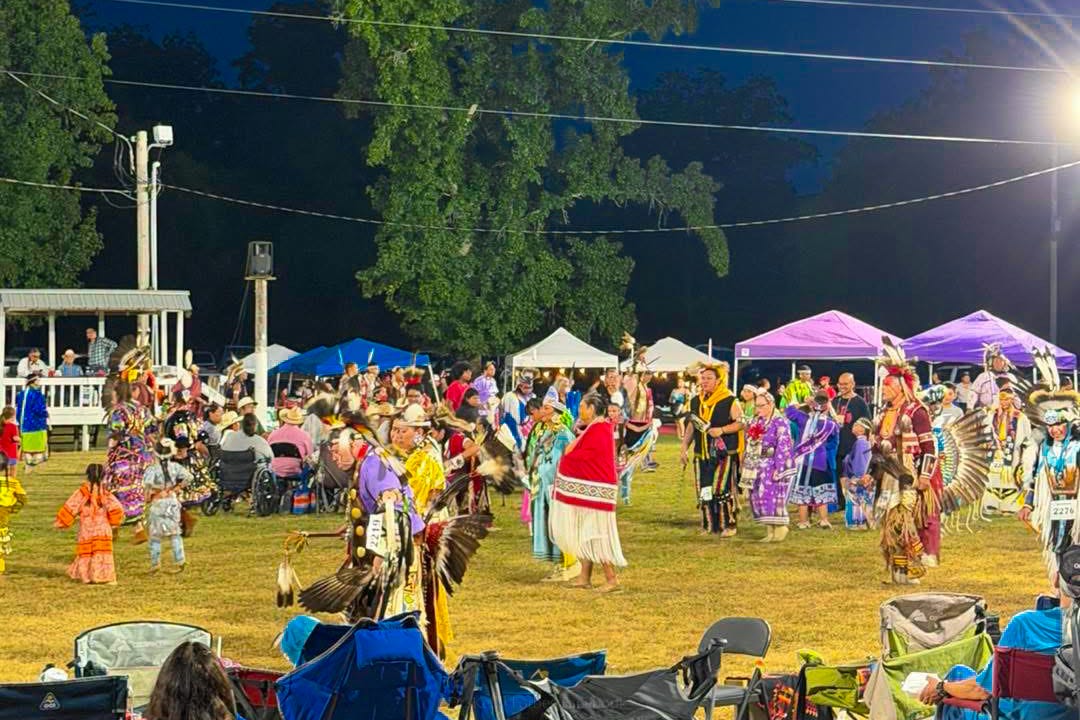
A feather touched the ground at Bell Saturday night, and the dancing stopped.
That’s not custom. That’s a first response nine generations deep. Elders and veterans moved in to gather it, and the crowd went quiet in the particular way a community goes quiet when it already knows what to do. Dr. Kelly Forbes, the Democratic nominee for Oklahoma Lieutenant Governor, stood at the edge of it, watching, not talking. He’d spent that same day finalizing campaign logistics. He came anyway, without a podium, without a press line.
Bell sits in the far southern tip of Adair County, close enough to Arkansas to touch it. If you’re looking for the farthest a place in Oklahoma can get from Oklahoma City and still be Oklahoma, Bell is a good candidate. Most people in this state couldn’t point to it on a map. That’s where the 39th Annual Bell Powwow happened Friday night.
Bell has done this before. In the late 1970s, roughly 200 families here had no running water. Wilma Mankiller made it her first project with the Cherokee Nation — residents built a 16-mile waterline themselves, over 14 months, with the tribe supplying equipment. The Cherokee Nation later named a water-infrastructure law after Mankiller and Charlie Soap. A movie got made about it. Bell already fought this fight once.
The Census shows what happened after. 602 people in 2000. 535 in 2010. 191 in 2020 — a two-thirds collapse in twenty years, and not because the map shrank. The boundary stayed the same size the whole time. Of the people still counted there, 74.3% are American Indian or Alaska Native, well above the county’s 42.5%. Bell is more Cherokee than Adair County itself, and it’s been getting smaller for two decades while staying exactly that.
The county numbers explain the rest. Per capita income is $23,710, while median household income is $48,041. The poverty rate is 22.4%, and just 12.3% of adults 25 and older have a bachelor’s degree or higher. Only 71.1% of households have a broadband subscription, and 55.1% of people 16 and older are in the civilian labor force. (U.S. Census Bureau, American Community Survey, 2020-2024 5-year estimates.)
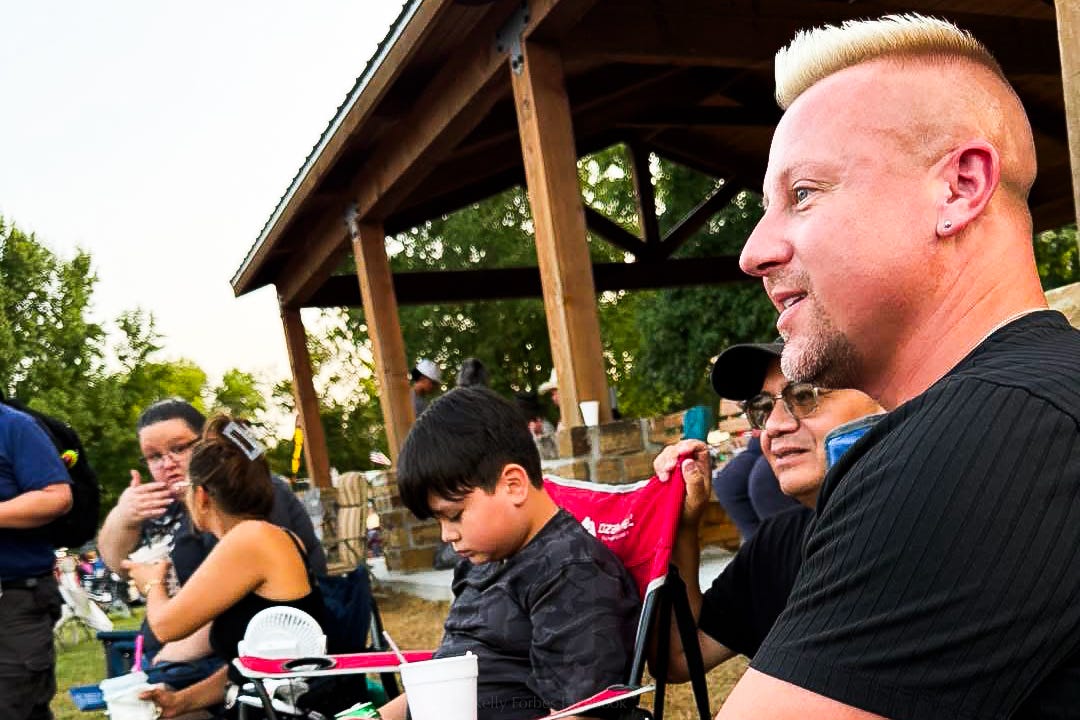
Forbes says the Lieutenant Governor holds a seat on the Oklahoma Broadband Governing Board, and he wants that seat to keep asking whether broadband money is actually reaching the places a map says it reaches. Bell had no cell service Friday night. Vendors ran cash-only.
One Facebook follower who grew up near Bell commented after the powwow, describing generations of family who stayed on that ground since Cherokee removal. She named what she said Forbes drove past on his way in — homes without running water, substance abuse, domestic violence, missing and murdered Indigenous people, unemployment, suicide. Bell has heard the first one before.
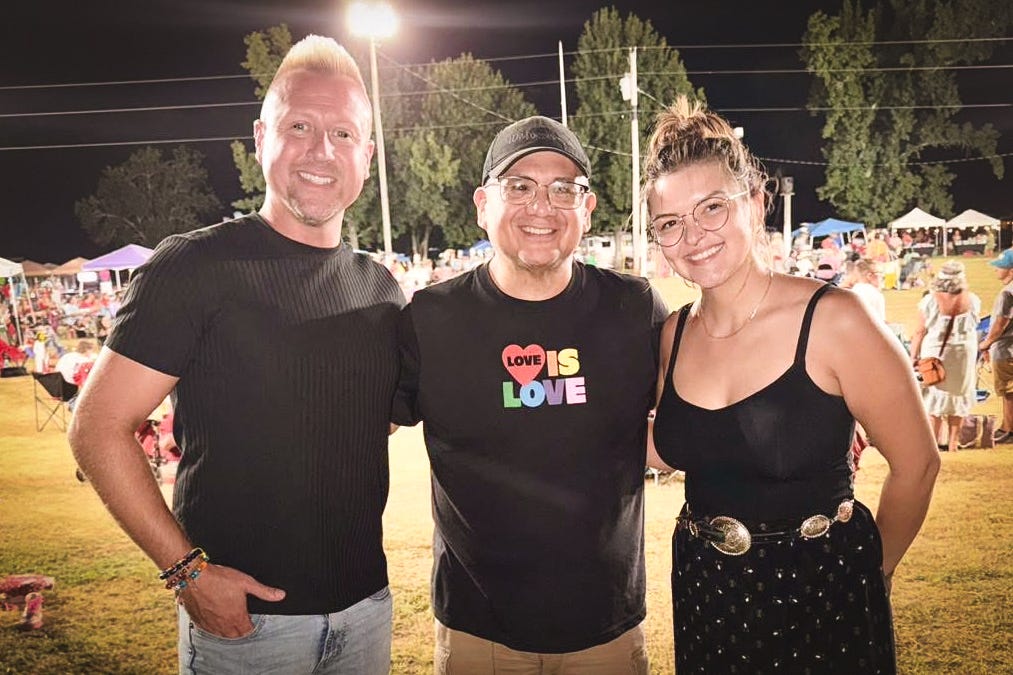
Nobody in Bell asked Forbes to fix anything Friday night. They watched him watch them. Trace and Leah Whitley worked behind the scenes to make sure Forbes knew the powwow was happening at all. Hannah Cole, running for Oklahoma House District 86, showed up again, the way she’s made a habit of doing and communities like Bell are noticing.Others took a year and a primary runoff to find their way to Adair County. They probably still haven’t heard of Bell. In a community that built its own waterline because nobody else would, that distinction is the whole story.
Troy Littledeer is an award-winning journalist, photographer and researcher from Adair County, Oklahoma. A member of the United Keetoowah Band of Cherokee Indians, Littledeer grew up at Candy Mink Springs, a rural community neighboring Bell, in Adair County, Oklahoma. He has spent more than two decades covering the people, sports, and communities of northeastern Oklahoma.
His work now focuses on tribal sovereignty, government accountability, education and the everyday realities of rural and Indigenous communities. His reporting and photography have appeared in tribal, Oklahoma and national publications. He is a lifetime member of the Indigenous Journalists Association and a 2025 recipient of the Tim Giago Free Press Award.
Littledeer writes commentary through Kituwah Punk.