

The seats filled first. Then people started standing.
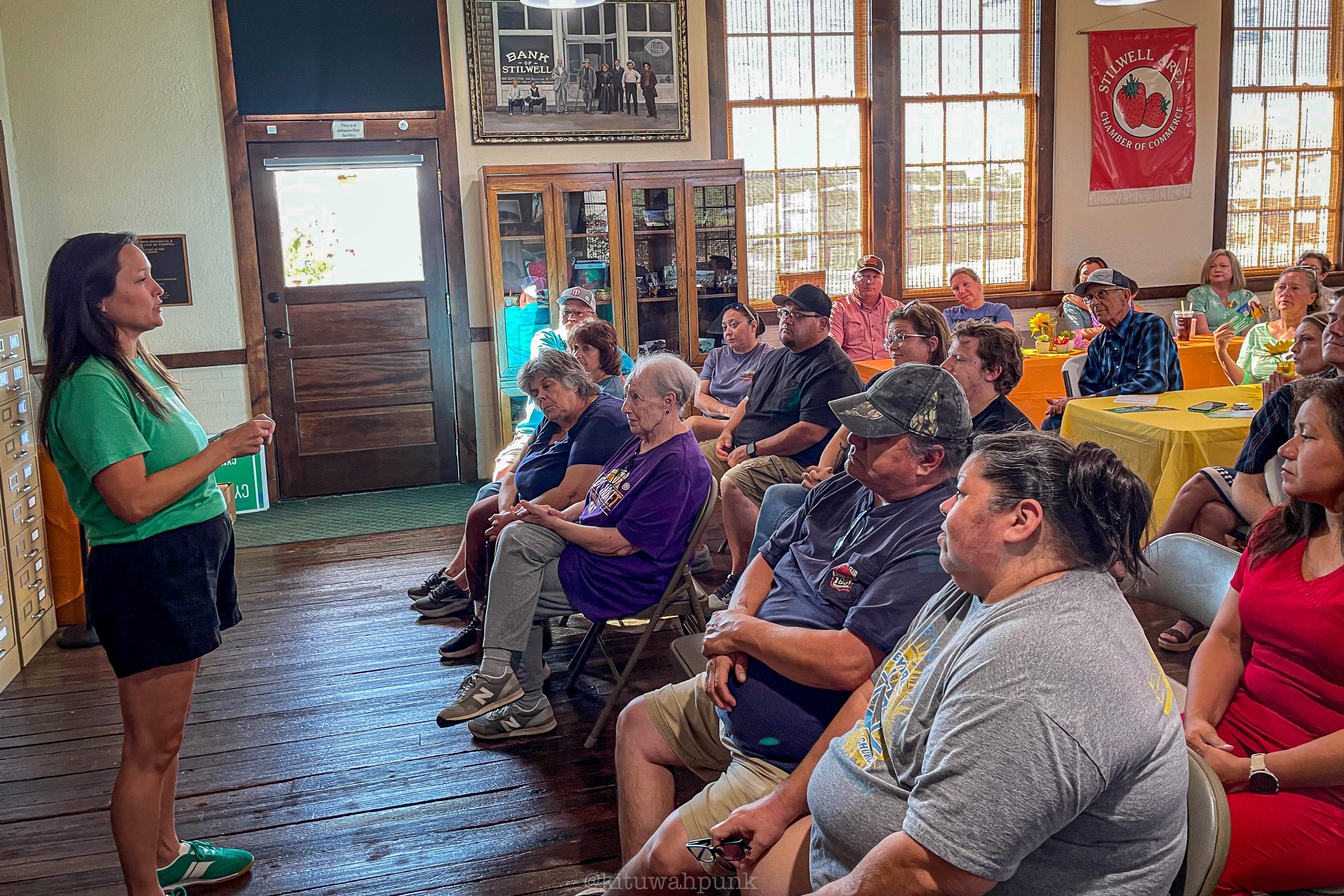
Cyndi Munson was already speaking Saturday evening, Sept. 19, at the KCS Train Depot when people kept coming through the door, and they kept coming as she wrapped up. Roughly 55 to 60 were inside by the end, every seat taken and about two handfuls on their feet.
Two former legislators were among them. Larry Adair of Stilwell, speaker of the Oklahoma House from 2001 to 2004, was there. So was former state Rep. John Auffet, who represented House District 86 from 2004 to 2010.
Munson, the Democratic nominee for governor, told the crowd about a hospital. The chief executive of a rural hospital took her to the boiler room first, she said. The building’s infrastructure had not been substantially updated since 1959, she said, and its last major capital investment came in the 1970s. Then he took her upstairs to see what the boiler keeps running.
“I don’t think that you should have to live in Oklahoma City or Tulsa or a larger metro area in order to get basic services,” Munson said in an interview. “I hear more and more from Oklahomans in rural communities who do have to drive many, many miles just to get basic services like primary care or seeing their doctor.”
On the budget, Munson said she would redirect tax dollars toward what she calls core government functions: public education, health care and infrastructure, which she defines to include water treatment and broadband along with roads and bridges. She said she would protect Medicaid expansion under the state constitution and pursue more federal Medicaid money for Oklahoma.
On schools, Munson said Oklahoma ranks near the bottom nationally in teacher pay and that districts lean on emergency-certified teachers, who are not required to complete traditional teacher training, because pay makes recruiting through the traditional pathway harder. She cited roughly 4,000 emergency-certified teachers in Oklahoma classrooms. That figure is hers. Kituwah Press has not independently confirmed it.
She tied behavior problems that parents and teachers report to unmet mental health needs and too few school counselors, and criticized state education leadership, without naming names, for not addressing why emergency certifications keep rising.
Asked directly in the interview about a widely circulated claim that she supports litter boxes in classrooms, Munson said she does not.
“I do not support litter boxes in our classrooms,” she said. “What I do support is certified teachers in our classrooms, standing in front of our students, teaching them the basic subjects that they need to be taught. Students need access to free breakfast, free lunch, so that they’re not worried about being hungry, and instead they’re prepared and ready to learn.”
Munson repeated her criticism of Gov. Kevin Stitt’s approach to tribal relations and said she has met with tribal leaders throughout her campaign. She named housing, education, infrastructure, child care and food-access programs as areas where she says state and tribal governments should be working more closely together.
Asked about her plan to restore a Cabinet-level Secretary of Native American Affairs, she said she wants the position made permanent through legislation. She said the office would consult tribal governments before state decisions are made.
“That also means working together in consultation with tribes as decisions are being made, having those conversations ahead of time as opposed to after,” Munson said.
She closed by telling the room that Republicans, Democrats and independents want the same basic things from state government, even if they disagree about how to get there.
Munson won the Democratic primary June 16 with 75% of the vote, according to The Associated Press. She faces Republican Mike Mazzei in the general election Nov. 3.
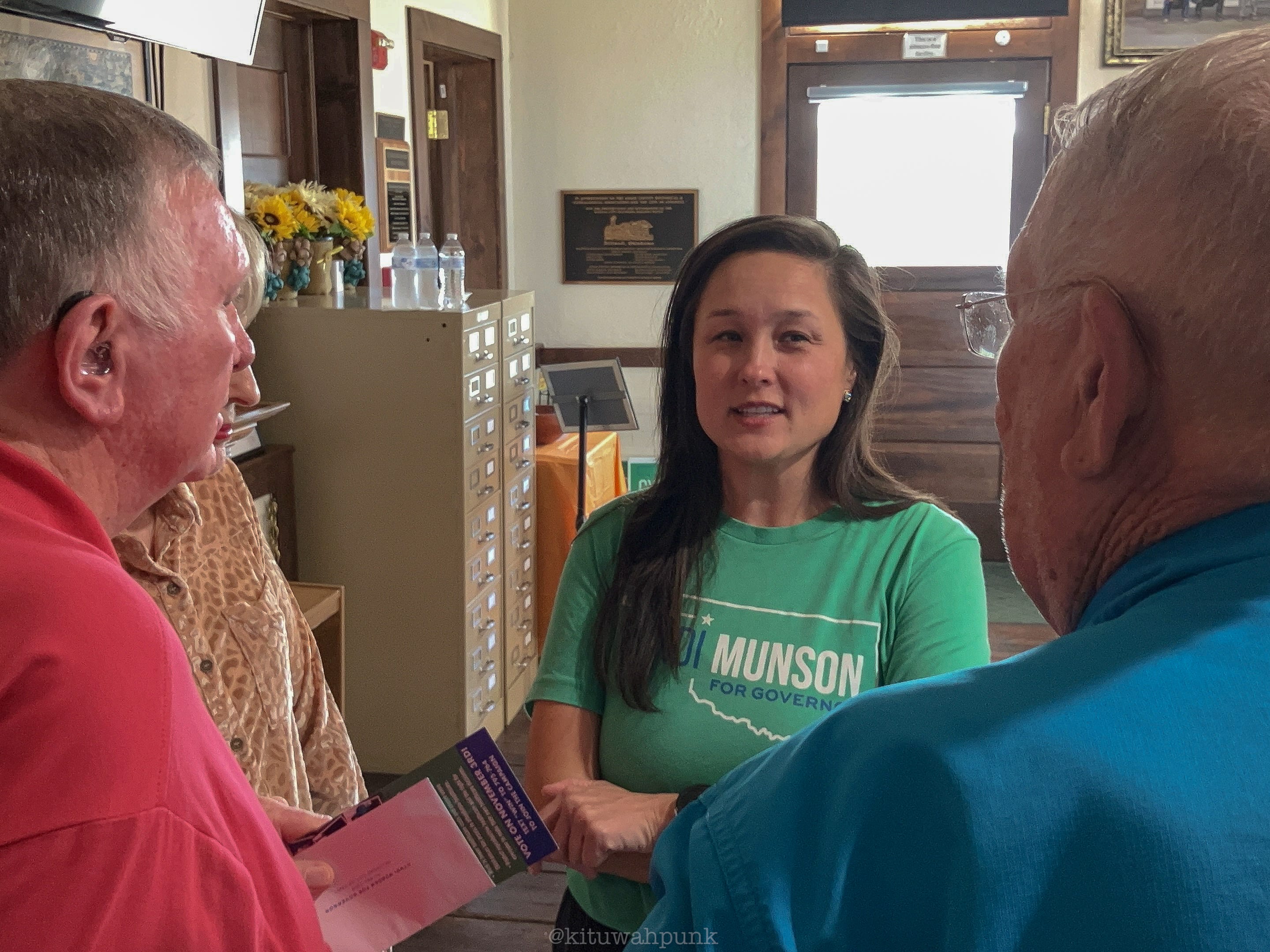
Photos: Cyndi Munson, at the KCS Train Depot in Stilwell on Saturday, Sept. 19 by Troy Littledeer/@kituwahpunk.
By Troy Littledeer. Troy is an Indigenous journalist and photographer and a member of the United Keetoowah Band of Cherokee Indians. A longtime tribal media reporter, he has covered tribal governments, sovereignty, education, sports and community issues for more than two decades. His work has appeared in publications including the Cherokee Phoenix, Osage News and NDNSports.com. Littledeer is a lifetime member of the Indigenous Journalists Association and a 2025 recipient of the Tim Giago Free Press Award.